
Gas-to-Energy Project Advances as Guyana Pushes Toward Lower-Cost Power and Industrial Expansion
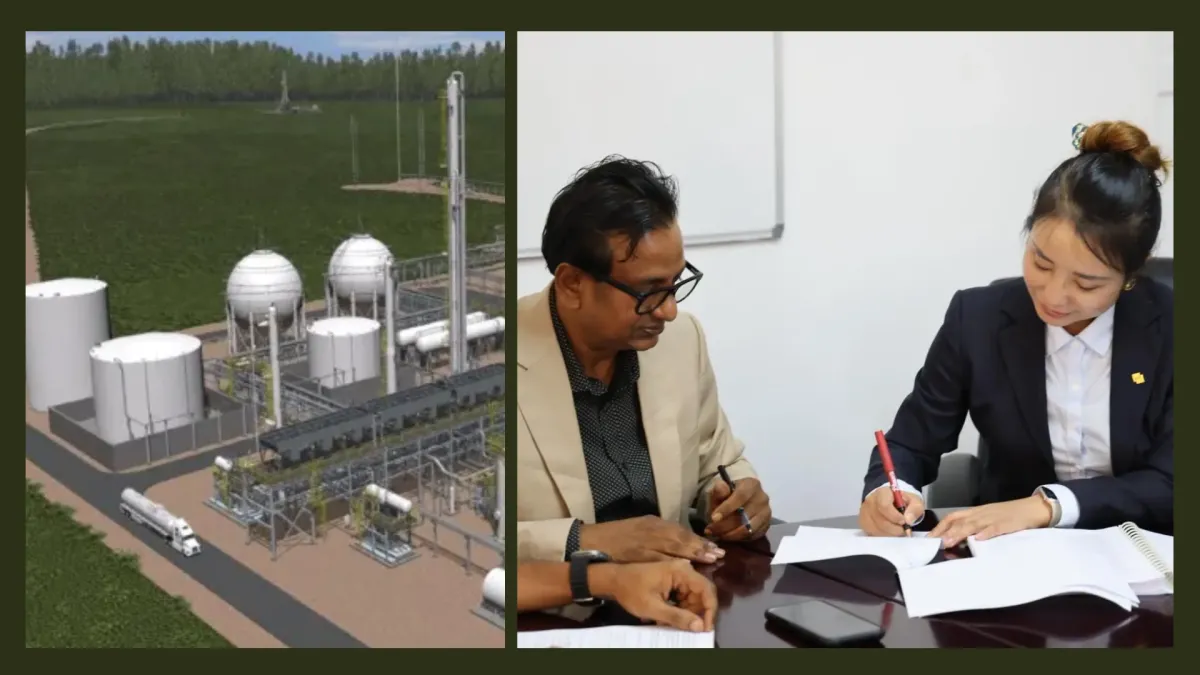
Guyana’s flagship Gas-to-Energy (GtE) project continues to advance, with the government confirming that contractual disputes linked to construction at the Wales development site have been resolved and that first power generation remains targeted for the end of 2026.
The settlement, reached between the government and contractor Lindsayca Guyana Inc., clears the way for continued construction under what officials described as a “fully aligned, forward-looking framework.” The broader project, centered around a 300-megawatt power plant and natural gas liquids (NGL) facility, is widely viewed as one of the country’s most transformative infrastructure initiatives, aimed at reducing electricity costs, improving energy reliability, and creating a stronger platform for industrial development.
Progress on the ground is also becoming increasingly visible. Lindsayca recently confirmed the installation of major processing equipment at the Wales site, including steam turbine and gas compression systems critical to future power generation and gas processing operations.
Alongside the Gas-to-Energy project, Guyana is also continuing to modernize its wider electricity infrastructure. Guyana Power and Light Inc. (GPL) recently signed a US$27.3 million agreement with PowerChina International Group Limited for the installation of a Battery Energy Storage System (BESS) designed to improve grid stability, reduce outages, and support the integration of renewable energy into the national power system. The initiative reflects a broader push to strengthen energy reliability as electricity demand continues to rise alongside economic expansion.
At the center of the GtE project is the transportation of natural gas from ExxonMobil’s offshore Stabroek Block developments to shore through a dedicated pipeline system. While government officials have repeatedly referred to the gas itself as “free,” the associated gas sales agreement is designed to allow recovery of the approximately US$1 billion invested by the ExxonMobil-led consortium in pipeline and related transport infrastructure.
Under the arrangement, Guyana is expected to make annual payments tied to infrastructure recovery rather than payment for the gas commodity itself. The government has indicated that future revenues generated through the commercialization of natural gas liquids extracted from the gas stream are expected to support these repayments.
Beyond electricity generation, the project is increasingly being positioned as a catalyst for wider industrial activity. Lower and more stable energy costs are expected to support manufacturing, agro-processing, logistics, and future gas-linked industries, while also reducing reliance on imported heavy fuel oil and improving national energy security.
For SGCC and its members, the continued advancement of Guyana’s energy infrastructure reinforces the scale of opportunities emerging across the wider energy and industrial value chain. As Guyana moves closer to large-scale gas utilization, grid modernization, and downstream industrial development, opportunities are expected to expand across engineering, fabrication, logistics, utilities, environmental services, technical support, and cross-border supply partnerships throughout the Suriname-Guyana corridor.
This content is based on publicly available research and information. SGCC does not assume responsibility for any inaccuracies or changes over time.
Guyana Office (English-speaking)
+592-703-0020 | [email protected]
Suriname Office (Dutch & English-speaking)
+592-746-0020 | [email protected]


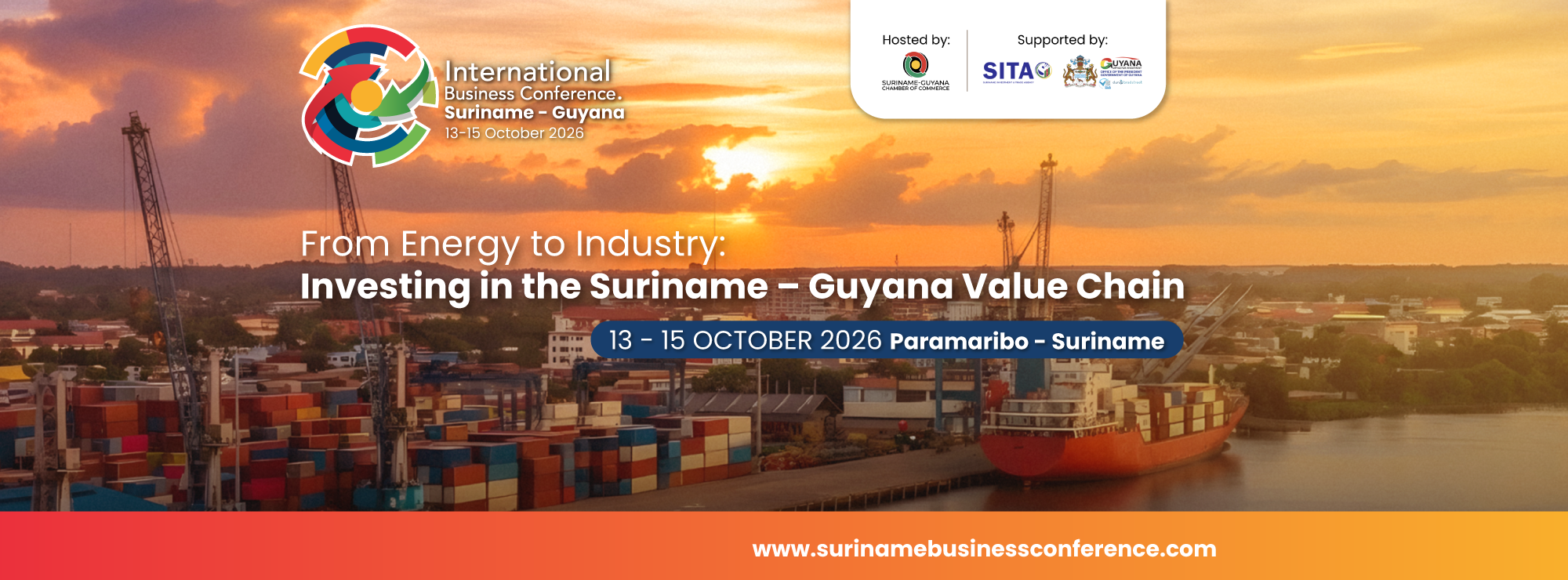
SGCC MEMBERS ARE ENTITLED TO A 50% DISCOUNT ON IBC DELEGATE PASSES
Copyright © 2024, SGCC, Guyana. All rights reserved.
Our contact info is:
+592 703 0020 | +597 746 0020 | [email protected]


